




































Food Engineering is not a career you hear about that often, most of the time people talk about how they wanna be a teacher or a nurse. Though many people know about engineering they might not know that there are many different types. Food and processing is just one of those many many different types of engineering. The outlook for careers in food engineering and processes career is excellent based on the many openings, high wages, future, and locations.
The first thing to look at in the food engineering and processes career is the outlook on availability or openings. According to U.S. Bureau of Labor Statistics, the employment size of this career field in 2024 is about 38,700 jobs. Compared to other careers this number might be perceived as small but for the relative popularity of the career this number is actually pretty big. The number 38,700 is also a good number because it allows there to be job openings for new people to come in but also still allows for competition. This ensures that there are good quality people working.
The next thing, which some people think is the most important aspect of a job, is the wage. The wage for this job can vary, especially depending on if you are just starting off or have been working for a while. Either way though there is a pretty good pay off. According to IFT, in their 2022 survey, “the median salary for professionals working in the science of food is $110,000. Food science graduates entering the field received a median salary starting at $77,000.” Indeed the Career Guide says that depending on location the average food engineer can make around $66,782 per year,. The U.S. Bureau of Labor Statistics says that the median pay is about $78,770 per year or $37.87 an hour. So to average this out, after a little bit of working in this field you can estimate that you will make about $70,000 to $80,000 a year.
Then the next outlook to look at is the future of the job which is becoming more and more important to look at due to the development of AI. Many job outlooks are actually starting to go down as AI are taking them over, luckily food engineering does not have this problem and the outlook for the future is going up. As stated by the U.S. Bureau of Labor Statistics, the outlook for a career in food engineering between 2024 and 20234 is projected to rise 6 percent, this is faster than average. While the percentage might seem small it actually means big things and lots of future opportunities.
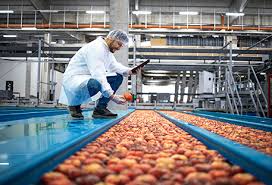
The final aspect to look at is the locations where food engineering and processing is needed. Which many people might not realize but they are needed everywhere. From food plants, to farms, to laboratories, and so much more. The food engineer’s job is to ensure that food is safe and to make the processing part as efficient as possible. So any company where there is something food related there are high chances of a food engineer position there. Some examples of nearby food processing plants that use food engineers are Nestle USA, Johnsonville Sausage, or Seneca Foods.
In conclusion, the food engineer and process career has a very good outlook in all its aspects. This includes openings, wage, its future, and locations where it is needed. So, the next time you think of engineering, remember that it is a very broad category that can range from all different things like space to foods.
References
IFT. (n.d.). Careers in Food Science. IFT.org. Retrieved February 6, 2026, from https://www.ift.org/career-development/learn-about-food-science/careers-in-food-science
Indeed. (2025, December 14). 35 Careers in Food Engineering To Consider (With Salaries). Indeed. Retrieved February 6, 2026, from https://www.indeed.com/career-advice/finding-a-job/food-engineering-careers
US Bureau Of Statistics. (n.d.). Agricultural and Food Scientists : Occupational Outlook Handbook: : U.S. Bureau of Labor Statistics. Retrieved February 6, 2026, from https://www.bls.gov/ooh/life-physical-and-social-science/agricultural-and-food-scientists.htm